
Introduction
The internet is full of useful websites, online tools, blogs, shops, business platforms, and digital services. But not every website is safe. Some domains can be suspicious, harmful, fake, spammy, or created only to trick users. This is why checking a website before visiting or trusting it has become very important.
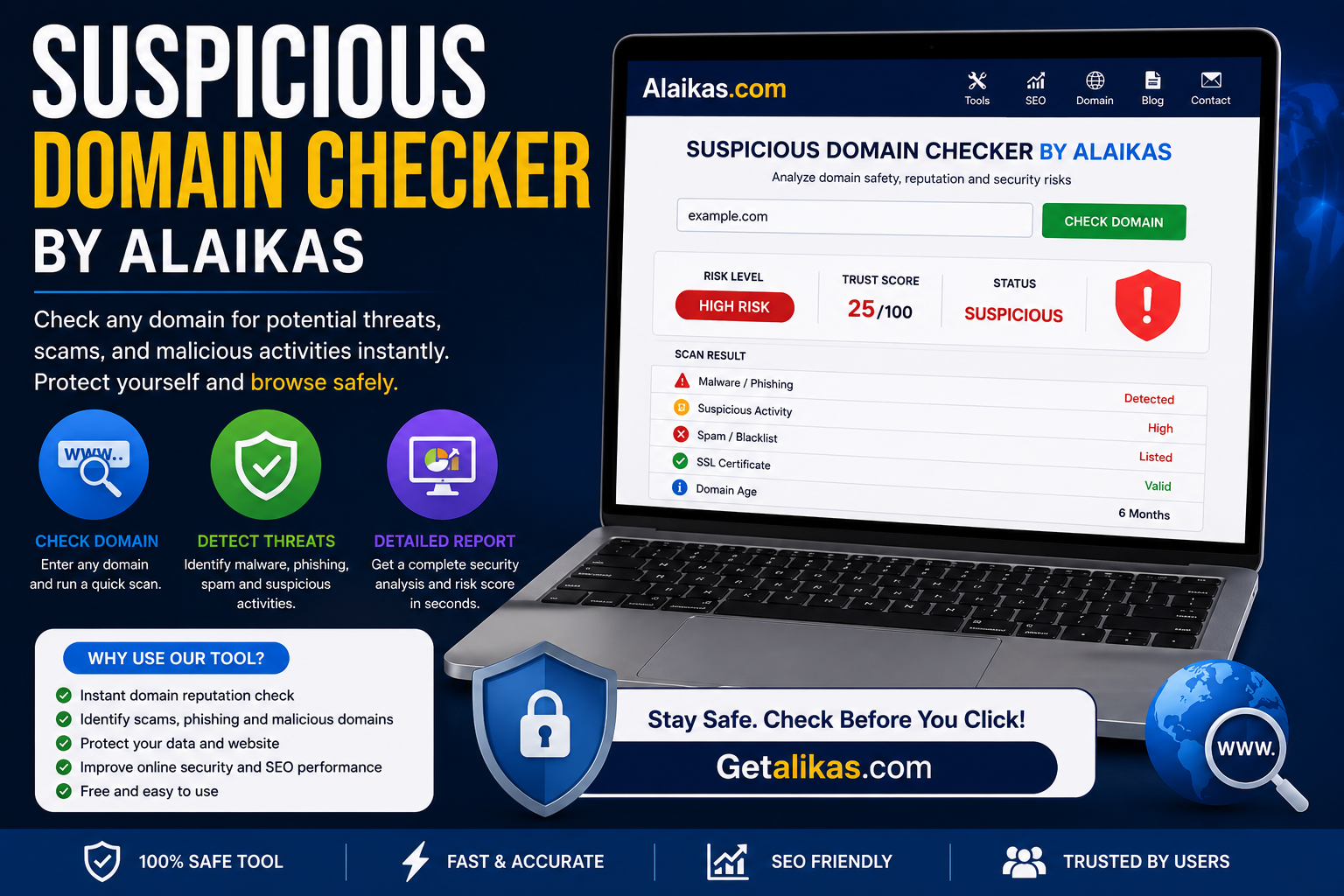
A suspicious domain checker by alaikas can help users understand whether a domain looks safe, risky, or suspicious. It can be useful for students, bloggers, SEO experts, website owners, digital marketers, online shoppers, and anyone who wants safer browsing.
When people search for tools like suspicious domain checker by alaikas, they usually want a simple way to check domain safety, detect red flags, and avoid risky websites. A domain checker can help identify issues such as unsafe links, strange domain names, poor trust signals, spam patterns, or possible security risks.
In this guide, we will explain what a suspicious domain is, why domain checking matters, how a suspicious domain checker works, and how websites like Alaikas.com and Getalikas.com can be connected with online safety, SEO tools, and digital security awareness.
What Is a Suspicious Domain?
A suspicious domain is a website address that may not look trustworthy or may show signs of risk. It does not always mean the website is harmful, but it means users should be careful before opening, clicking, downloading, or entering personal information.
A suspicious domain may have signs like:
- Strange spelling
- Random numbers or letters
- Fake brand names
- Too many redirects
- No HTTPS security
- Poor website design
- Spammy popups
- Hidden contact details
- Recently created domain
- Misleading offers
- Malware warnings
- Unusual download requests
For example, a domain that looks similar to a popular brand but has extra letters or symbols may be suspicious. Scammers often use confusing domain names to make users think they are visiting a trusted website.
What Is Suspicious Domain Checker by Alaikas?
Suspicious domain checker by alaikas refers to a useful online concept or tool that helps users check whether a domain may be risky or suspicious. It can support safer browsing by giving users a better idea about a website before they trust it.
A checker may analyze different signals, such as:
- Domain format
- Website security
- URL structure
- Spam indicators
- Suspicious patterns
- Redirection behavior
- Trust signals
- Basic website safety factors
The goal is simple: help users make smarter decisions before visiting or sharing information on a website.
A tool like suspicious domain checker by alaikas can be helpful for people who want to check unknown domains, review links, or avoid unsafe websites.
Why Suspicious Domain Checking Is Important
Many people click links quickly without checking where they lead. This can be risky, especially when links come from unknown emails, messages, comments, ads, or social media posts.
Protects Users From Unsafe Websites
Suspicious websites may try to steal information, show fake offers, or push harmful downloads. Checking a domain first can reduce risk.
Helps Avoid Phishing Pages
Phishing websites are fake pages designed to look like real brands. They may ask users to enter passwords, email addresses, payment details, or personal data.
A suspicious domain checker can help users spot signs of fake websites before trusting them.
Supports Better SEO Decisions
SEO experts often analyze domains before building backlinks, buying guest posts, or accepting link placements. A suspicious domain may hurt trust and quality.
Before working with a website, SEO professionals can check whether the domain looks clean and reliable.
Helps Website Owners Maintain Trust
Website owners can check their own domains to make sure there are no obvious risk signals. This helps protect brand reputation and user confidence.
Useful for Online Shoppers
Before buying from a new online store, users should check the domain. A suspicious domain checker can help identify possible warning signs.
Common Signs of a Suspicious Domain
A suspicious domain often gives small warning signs. Users should learn these signs to stay safer online.
1. Misspelled Brand Names
Scammers may create domains that look similar to trusted brands.
Examples of suspicious patterns include:
- Extra letters
- Missing letters
- Wrong spellings
- Similar-looking words
- Different domain extensions
This technique is often used to confuse users.
2. No HTTPS Security
HTTPS shows that a website uses secure communication between browser and server. If a website does not use HTTPS, users should be more careful.
A website without HTTPS is not always dangerous, but it is less trustworthy, especially if it asks for login or payment information.
3. Too Many Popups
A website with aggressive popups, fake alerts, and forced clicks may be suspicious.
Common risky popups include:
- “Your device is infected”
- “Click here to claim prize”
- “Download now”
- “Update required”
- “You have won money”
These messages are often used to trick users.
4. Random Domain Names
Some risky domains use random letters, numbers, or meaningless words. These domains may be created quickly for spam campaigns.
Example patterns:
- Long random strings
- Mixed numbers and letters
- Strange hyphens
- Unclear brand identity
5. Recently Created Domains
New domains are not always bad. Many real businesses start with new domains. But if a new domain is offering big discounts, asking for payment, or pretending to be a famous brand, users should be careful.
6. Fake Contact Information
Trustworthy websites usually provide contact details, business information, privacy policy, and terms pages.
A suspicious website may hide this information or provide fake details.
7. Poor Website Content
Low-quality content, copied text, grammar mistakes, and broken pages can be signs that a website is not reliable.
How Suspicious Domain Checker by Alaikas Can Help
A domain checker helps users make quick decisions. Instead of guessing, users can review possible safety indicators.
Checks Domain Format
A checker can help identify whether a domain name looks strange, misleading, or spammy.
Supports Safer Browsing
Before opening an unknown link, users can check the domain and avoid risky pages.
Helps SEO Professionals
SEO experts can use suspicious domain checking during backlink audits, guest post checks, and competitor analysis.
Improves Digital Awareness
Tools like Alaikas.com and Getalikas.com can help users learn more about website safety, SEO tools, and online protection.
Saves Time
Instead of manually checking many factors, a checker can quickly provide useful signals.
Suspicious Domain Checker for SEO Experts
SEO experts regularly deal with different websites, backlinks, guest posting platforms, and outreach opportunities. Not every domain is worth using for backlinks.
A suspicious domain may have:
- Spammy content
- Low-quality pages
- Unsafe redirects
- Fake traffic
- Poor trust signals
- Harmful outbound links
- Irrelevant topics
- Thin content
Before building links, SEO professionals should check domain quality. A tool like suspicious domain checker by alaikas can support safer SEO research.
Why SEO Experts Should Avoid Suspicious Domains
Backlinks from low-quality or suspicious domains can damage SEO performance. Search engines value trust, relevance, and quality.
Avoiding suspicious domains helps protect:
- Website authority
- Search rankings
- Brand reputation
- Link profile quality
- Long-term SEO growth
Suspicious Domain Checker for Bloggers
Bloggers often receive link exchange offers, guest post requests, and collaboration messages. Some of these may come from low-quality or suspicious websites.
A blogger can use a suspicious domain checker before:
- Accepting guest posts
- Adding external links
- Collaborating with unknown websites
- Joining affiliate offers
- Sharing links with readers
This helps protect the blog and its audience.
Suspicious Domain Checker for Online Users
Normal internet users can also benefit from domain checking. Many scams happen through unknown links sent by email, SMS, WhatsApp, Telegram, Facebook, or other platforms.
Before clicking a link, users should check:
- Does the domain name look real?
- Is the spelling correct?
- Does it use HTTPS?
- Is it asking for sensitive information?
- Does the offer look too good to be true?
- Is the website design professional?
- Are contact details available?
A suspicious domain checker can make this process easier.
Suspicious Domain Checker for Businesses
Businesses need to protect their brand and customers. Fake domains can be created to copy business names and mislead users.
A business can use suspicious domain checking to:
- Monitor fake websites
- Protect customers
- Check partner websites
- Review vendor links
- Avoid unsafe collaborations
- Maintain online trust
For businesses, online safety is not optional. It is part of brand protection.
How to Use a Suspicious Domain Checker
Using a suspicious domain checker is usually simple.
Step 1: Copy the Domain or URL
Copy the website address you want to check.
Example:
example.com
or
Step 2: Paste It Into the Checker
Open the checker and paste the domain or URL into the input field.
Step 3: Start the Check
Click the check button. The tool will analyze the domain and show possible results.
Step 4: Review the Signals
Look at the result carefully. A checker may show warnings, safety indicators, or basic domain details.
Step 5: Decide Carefully
If the domain looks risky, avoid clicking, downloading, or entering personal details.
Important Things to Check Before Trusting a Website
A suspicious domain checker is helpful, but users should also know manual safety checks.
Check the URL Carefully
Look at the domain name letter by letter. Fake websites often use small spelling changes.
Look for HTTPS
Secure websites usually start with https://. Avoid entering sensitive data on websites without HTTPS.
Check Website Content
A real website usually has clear content, proper pages, and useful information.
Review Contact Page
Trustworthy websites often provide contact details or support information.
Avoid Unrealistic Offers
If a website promises free money, expensive products for almost nothing, or impossible benefits, be careful.
Do Not Download Unknown Files
Avoid downloading software, APKs, documents, or extensions from unknown domains.
Difference Between Safe, Risky, and Suspicious Domains
It is important to understand the difference between these terms.
Safe Domain
A safe domain usually has good trust signals, proper security, clear content, and no obvious suspicious behavior.
Risky Domain
A risky domain may show warning signs such as poor security, strange redirects, or unknown ownership.
Suspicious Domain
A suspicious domain may not be confirmed harmful, but it has enough warning signs that users should be careful.
In simple words, suspicious does not always mean dangerous, but it means “check before trusting.”
How Alaikas.com and Getalikas.com Fit Into Online Safety
Keywords like Alaikas.com and Getalikas.com can be used as branded terms connected with online tools, website checking, SEO support, and digital safety awareness.
A platform connected with website tools can help users understand:
- Domain safety
- Website performance
- Page size
- SEO basics
- Online trust
- Technical website checks
- Digital growth
By providing helpful tools and educational content, a site can become useful for beginners and professionals.
Benefits of Using Online Website Checker Tools
Website checker tools are useful because they make technical information easier to understand. Instead of manually analyzing everything, users can get quick results.
Fast Analysis
Online tools can check website-related data quickly.
Beginner-Friendly
Many users are not technical experts. Simple tools make website checking easier.
Better Decision-Making
A checker can help users decide whether to trust, visit, or avoid a domain.
Useful for SEO Audits
Website checking tools can support SEO work by identifying issues and improvement areas.
Helps Improve Website Quality
Website owners can use tools to improve performance, trust, and usability.
How to Keep Your Own Domain Trustworthy
If you own a website, you should make sure your domain does not look suspicious.
Use HTTPS
Install an SSL certificate and make sure your website opens securely.
Create Important Pages
Add important pages such as:
- About Us
- Contact Us
- Privacy Policy
- Terms and Conditions
- Disclaimer
These pages improve trust.
Avoid Spammy Ads
Too many ads, redirects, and popups can make your site look unsafe.
Publish Original Content
High-quality content builds credibility and improves SEO.
Keep Website Design Clean
A professional design makes users feel more comfortable.
Update Website Regularly
Outdated websites may look inactive or unreliable.
Common Mistakes Users Make With Suspicious Domains
Many users make simple mistakes that can put them at risk.
Clicking Links Without Checking
Always check unknown links before opening them.
Trusting Similar-Looking Domains
A fake domain can look almost the same as a real one.
Entering Personal Information Too Quickly
Do not enter passwords, payment details, or ID information on unknown websites.
Ignoring Browser Warnings
If your browser warns you about a website, take it seriously.
Downloading Unknown Files
Unknown files can be risky. Avoid downloads from untrusted domains.
Best Practices for Safe Browsing
Safe browsing is a habit. Users should follow basic rules every day.
- Check URLs before clicking
- Use HTTPS websites
- Avoid suspicious downloads
- Do not trust unrealistic offers
- Keep browser updated
- Use strong passwords
- Avoid sharing personal data on unknown sites
- Check domains before visiting
- Be careful with email links
- Use trusted tools for website checking
These simple steps can reduce online risks.
Suspicious Domain Checker and Digital Trust
Digital trust is very important. Users want to know that the websites they visit are safe and reliable. A suspicious domain checker supports digital trust by helping people identify possible risks.
For website owners, trust can improve:
- User engagement
- Brand reputation
- Conversions
- SEO performance
- Returning visitors
For users, trust means safer browsing and better online decisions.
Why Every Website Owner Should Understand Domain Safety
Website owners should not only focus on design and content. Domain safety is also important.
A safe and trustworthy domain can help with:
- Better user confidence
- Stronger SEO value
- More professional branding
- Fewer security concerns
- Better online reputation
If your website looks suspicious, users may leave even if your content is good.
Future of Domain Safety Tools
As online scams become more advanced, domain safety tools will become even more important. Users need faster and smarter ways to check websites before trusting them.
Future domain checker tools may focus on:
- AI-based risk detection
- Real-time URL scanning
- Better phishing detection
- Brand impersonation alerts
- Spam score analysis
- Safer browsing reports
- Easy user-friendly dashboards
Tools connected with platforms like Alaikas.com and Getalikas.com can help make online safety more accessible for everyone.
Final Checklist Before Trusting a Domain
Before trusting any domain, check these points:
- Is the spelling correct?
- Does the website use HTTPS?
- Does the offer look realistic?
- Are contact details available?
- Is the design professional?
- Is the content original?
- Are there too many popups?
- Does the website ask for sensitive data?
- Does the domain redirect strangely?
- Does a checker show warning signs?
If several warning signs appear, it is better to avoid the website.
Conclusion
Online safety is more important than ever. Every day, users visit new websites, click unknown links, and interact with digital platforms. While many websites are useful and trustworthy, some domains can be suspicious or risky. This is why a tool like suspicious domain checker by alaikas can be helpful for safer browsing and smarter online decisions.
A suspicious domain checker can help users identify possible red flags before they trust a website. It can support bloggers, SEO experts, businesses, online shoppers, and everyday internet users. Whether you are checking a backlink source, reviewing a guest posting site, or verifying an unknown link, domain safety should always be part of your process.
Platforms and branded terms such as Alaikas.com and Getalikas.com can be connected with online tools, website checking, SEO support, and digital awareness. A helpful resource like suspicious domain checker by alaikas can guide users toward better website safety, stronger trust, and smarter online browsing.
In the end, checking a domain before trusting it is a simple step that can prevent bigger problems. Safe browsing begins with awareness, and domain checking is one of the easiest ways to stay alert online.
FAQs
1. What is suspicious domain checker by alaikas?
Suspicious domain checker by alaikas is a keyword related to a tool or resource that helps users check whether a domain may look risky, unsafe, or suspicious.
2. Why should I check a suspicious domain?
You should check a suspicious domain to avoid phishing pages, unsafe websites, spam links, harmful downloads, and fake online platforms.
3. Is every suspicious domain harmful?
No. A suspicious domain is not always harmful, but it may show warning signs. Users should be careful and check before trusting it.
4. Can suspicious domains affect SEO?
Yes. Getting backlinks from suspicious or spammy domains can hurt your website’s trust and link profile. SEO experts should check domains before building links.
5. How can I make my own domain look trustworthy?
Use HTTPS, publish original content, add contact and policy pages, avoid spammy ads, keep your design clean, and update your website regularly.
