
Introduction
In the modern digital world, having a website is not enough. A website needs to be properly optimized so search engines like Google can easily discover, crawl, and index its pages. One of the most important technical SEO elements that helps search engines understand your website structure is a sitemap.
Many website owners, bloggers, developers, and SEO professionals search for tools that can automatically create website sitemaps. This is where a keyword like sitemap generator spellmistake becomes important. People may search this term while looking for sitemap creation tools, SEO solutions, or ways to generate XML files for better indexing.
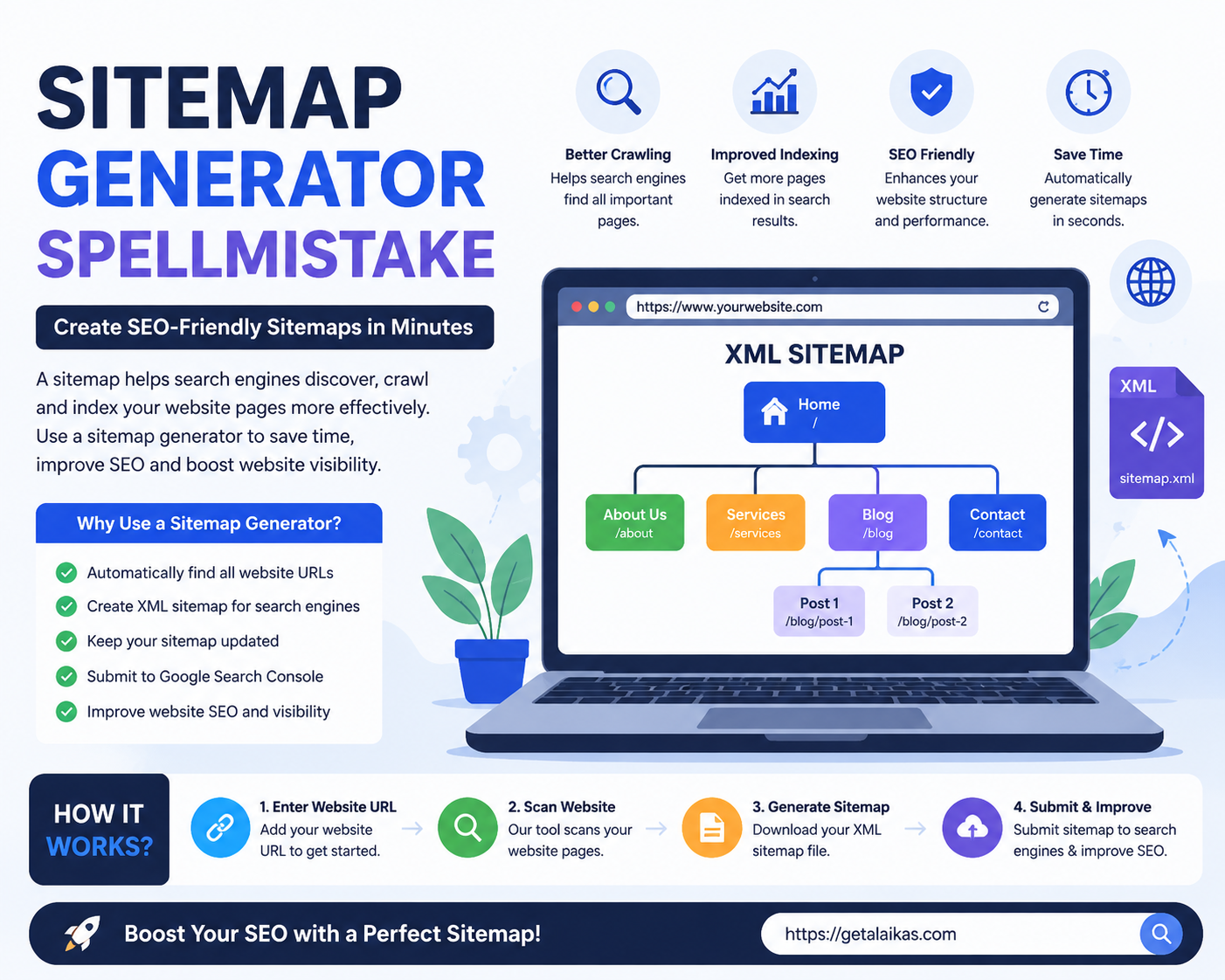
A sitemap works like a roadmap for search engines. It tells search engine bots which pages exist on your website and which pages are important. Without a properly created sitemap, some website pages may take longer to appear in search results.
If you are looking for a simple way to understand sitemap creation, tools like sitemap generator spellmistake resources can help beginners and professionals learn how sitemap generators work and how they support SEO performance.
In this detailed guide, we will explain what a sitemap generator is, why it matters for SEO, how sitemap generators work, common mistakes, optimization tips, and how businesses can use sitemaps to improve online visibility.
What Is a Sitemap?
A sitemap is a file that contains information about the pages, videos, images, and other important content available on a website. It helps search engines understand the organization of a website.
The most common type of sitemap is an XML sitemap.
An XML sitemap usually includes:
- Website URLs
- Page update dates
- Content priority
- Change frequency
- Relationship between pages
For example, a website may contain:
- Homepage
- About page
- Service pages
- Blog articles
- Product pages
- Contact page
A sitemap informs search engines that these pages exist and should be considered for crawling.
What Is a Sitemap Generator?
A sitemap generator is an online tool or software that automatically creates a sitemap file for a website.
Instead of manually writing hundreds or thousands of URLs, a sitemap generator scans your website and creates a structured XML sitemap automatically.
A sitemap generator can help you:
- Create XML sitemaps
- Find website pages
- Organize URLs
- Improve indexing
- Save time
- Reduce technical SEO errors
For large websites with many pages, manually creating a sitemap can be difficult. Automated sitemap generators make the process easier.
Understanding Sitemap Generator Spellmistake Keyword
The keyword sitemap generator spellmistake appears to be a search phrase where users may have typed a variation or spelling mistake while searching for sitemap-related tools.
Search engines often understand user intent even when keywords contain spelling errors. Many users accidentally type:
- Missing letters
- Extra words
- Incorrect spellings
- Brand variations
A website that provides helpful content around such keywords can capture search traffic from users who are looking for solutions.
Using a resource like sitemap generator spellmistake can help users understand sitemap creation and SEO-related tools.
Why Sitemaps Are Important for SEO
Sitemaps play an important role in technical SEO. They help search engines discover content faster and understand website structure.
1. Helps Search Engines Discover Pages
Search engines use bots called crawlers to explore websites. A sitemap provides a list of important URLs that should be checked.
This is especially useful for:
- New websites
- Large websites
- Websites with many categories
- Websites with limited backlinks
2. Improves Website Indexing
Indexing means storing website pages in a search engine database.
A sitemap does not guarantee ranking, but it can help search engines find and understand your pages.
A properly created sitemap can improve:
- Page discovery
- Crawling efficiency
- Content visibility
3. Supports New Websites
New websites often have fewer backlinks. Because of this, search engines may take longer to discover pages.
Submitting a sitemap can help search engines understand your website faster.
4. Helps Large Websites
Large websites may have thousands of pages. Without a sitemap, some pages may remain hidden from search engines.
Examples:
- Ecommerce stores
- News websites
- Educational platforms
- Business directories
5. Helps Track SEO Performance
When you submit a sitemap through Google Search Console, you can monitor:
- Indexed pages
- Sitemap errors
- Crawling problems
- Search engine activity
Types of Sitemaps
Different websites may require different sitemap types.
XML Sitemap
An XML sitemap is mainly created for search engines.
It contains URLs and technical information.
Common uses:
- Blog websites
- Business websites
- Ecommerce websites
- News websites
HTML Sitemap
An HTML sitemap is designed for website visitors.
It helps users navigate through website pages.
Benefits:
- Better user experience
- Easier navigation
- Improved website structure
Image Sitemap
Image sitemaps help search engines discover website images.
Useful for:
- Photography websites
- Ecommerce stores
- Design websites
Video Sitemap
Video sitemaps help search engines understand video content.
Useful for:
- Video platforms
- Tutorial websites
- Media websites
How Does a Sitemap Generator Work?
A sitemap generator follows a simple process.
Step 1: Website Scanning
The tool scans your website pages and collects URLs.
It checks:
- Internal links
- Website structure
- Available pages
Step 2: URL Organization
The generator organizes website URLs into a structured format.
It identifies:
- Main pages
- Categories
- Blog posts
- Important sections
Step 3: XML File Creation
After collecting URLs, the tool creates an XML sitemap file.
Example:
https://example.com/page1
https://example.com/page2
https://example.com/blog-post
Step 4: Sitemap Submission
After creating the sitemap, website owners can submit it to search engines through tools like Google Search Console.
Benefits of Using Sitemap Generator Spellmistake Tools
Using a sitemap generator provides many advantages.
Saves Time
Manually creating a sitemap can take hours. Automated tools create it within minutes.
Reduces Errors
A small mistake in sitemap coding can affect crawling. Generators reduce manual errors.
Helps Beginners
People without technical knowledge can easily create sitemaps.
Supports SEO Optimization
A sitemap improves website communication with search engines.
Useful for Website Audits
SEO professionals use sitemap generators during technical website audits.
How to Create a Sitemap Using a Generator
Creating a sitemap is simple.
Step 1: Choose a Sitemap Generator
Select a reliable sitemap creation tool.
You can explore resources like sitemap generator spellmistake for sitemap-related guidance.
Step 2: Enter Website URL
Add your complete website address.
Example:
https://example.comStep 3: Start Sitemap Generation
Click the generate button.
The tool will scan your website.
Step 4: Download Sitemap File
After completion, download the XML sitemap file.
Usually the file name is:
sitemap.xmlStep 5: Upload Sitemap
Upload the sitemap file to your website root folder.
Example:
example.com/sitemap.xmlStep 6: Submit to Search Engines
Submit your sitemap through Google Search Console and other webmaster tools.
Sitemap Generator and Google Search Console
Google Search Console is one of the most important tools for website owners.
Submitting a sitemap allows Google to understand your website structure.
Steps:
- Open Google Search Console
- Select your website
- Go to Sitemap section
- Enter sitemap URL
- Click Submit
Example:
sitemap.xmlGoogle will then process your sitemap.
Common Sitemap Mistakes to Avoid
Many website owners create sitemaps but make technical mistakes.
Including Broken URLs
Do not add pages that show errors.
Avoid:
- 404 pages
- Deleted pages
- Broken links
Adding Noindex Pages
Do not include pages that you do not want search engines to index.
Examples:
- Login pages
- Private pages
- Admin pages
Creating Duplicate URLs
Avoid adding multiple versions of the same page.
Example:
example.com/page
example.com/page/
Choose one preferred version.
Ignoring Sitemap Updates
Websites change regularly. Update your sitemap when adding new pages.
Creating Very Large Sitemaps
Large websites may need multiple sitemap files.
Google allows sitemap indexes for websites with many URLs.
Sitemap Generator for WordPress Websites
WordPress websites can easily create sitemaps.
Many SEO plugins provide sitemap features.
Popular options include:
- SEO plugins
- Sitemap plugins
- Website management tools
WordPress sitemap benefits:
- Automatic updates
- Easy management
- Better indexing
- Less technical work
Sitemap Generator for Ecommerce Websites
Ecommerce websites often have thousands of pages.
A sitemap helps search engines discover:
- Products
- Categories
- Collections
- Offers
- Landing pages
For online stores, sitemap optimization is extremely important.
Sitemap Generator for Bloggers
Bloggers publish new articles regularly. A sitemap helps search engines discover fresh content.
Benefits for bloggers:
- Faster indexing
- Better article discovery
- Improved SEO management
- Easier content tracking
Whenever you publish a new blog post, an updated sitemap helps search engines find it.
Sitemap and Website Ranking
A sitemap itself does not directly guarantee higher rankings.
However, it supports SEO by helping search engines:
- Discover pages
- Understand website structure
- Crawl important content
Ranking depends on many factors:
- Content quality
- Backlinks
- Website speed
- User experience
- Keyword optimization
- Technical SEO
A sitemap is one part of a complete SEO strategy.
Best Practices for Sitemap Optimization
Follow these tips for better sitemap performance.
Keep Sitemap Updated
Always maintain a fresh sitemap.
Include Important Pages Only
Focus on pages that provide value.
Use Proper URL Structure
Keep URLs clean and readable.
Remove Low-Quality Pages
Avoid adding thin content pages.
Monitor Sitemap Errors
Regularly check Search Console reports.
How Sitemap Generator Helps SEO Professionals
SEO experts use sitemap generators during website analysis.
They help with:
- Technical audits
- Website migration
- Indexing checks
- SEO reports
- Client projects
A sitemap gives SEO professionals valuable information about website structure.
Future of Sitemap Technology
As websites become larger and more complex, sitemap tools continue improving.
Future sitemap generators may include:
- AI-powered crawling
- Automatic SEO recommendations
- Error detection
- Smart indexing suggestions
- Performance analysis
Modern SEO tools are becoming easier for beginners while providing advanced features for professionals.
Conclusion
A sitemap is an essential part of modern website SEO. It helps search engines discover, understand, and index website content more effectively. Whether you run a blog, business website, ecommerce store, or online platform, having a properly created sitemap can improve your technical SEO foundation.
A tool or resource related to sitemap generator spellmistake can help users understand how sitemap creation works and how to optimize website visibility.
Using a sitemap generator saves time, reduces errors, and makes website management easier. By creating a clean XML sitemap, submitting it to search engines, and maintaining it regularly, website owners can improve crawling efficiency and support long-term SEO growth.
For beginners and professionals looking for sitemap guidance, resources like sitemap generator spellmistake can provide useful information about website optimization and search engine visibility.
Remember, SEO success requires many elements working together. A sitemap is not the only ranking factor, but it is an important technical step toward building a search-friendly website.
FAQs
1. What is a sitemap generator?
A sitemap generator is a tool that automatically creates a sitemap file containing website URLs to help search engines discover pages.
2. Is a sitemap important for SEO?
Yes, a sitemap helps search engines crawl and understand your website structure, especially for large or new websites.
3. How often should I update my sitemap?
Your sitemap should update whenever you add, remove, or modify important website pages.
4. Can a sitemap improve Google rankings?
A sitemap does not directly increase rankings, but it helps search engines discover content, which supports SEO performance.
5. What is sitemap generator spellmistake?
Sitemap generator spellmistake is a search keyword related to sitemap creation tools and resources that help users generate SEO-friendly website sitemaps.
